2. Dynamics of the contemporary food systems
The limits of industrialized food systems
There is no real consensus on the definition of ‘sustainable food’ or ‘sustainable food systems’ (Béné et al., 2019). Nevertheless, there is agreement on the reasons why currently widespread industrialized food systems are problematic. First, in areas where they prevail, these systems have irreversible impacts that will be very hard or even impossible for future generations to manage. Second, their generalization (should it occur) is not feasible within the limits of our planet’s resources. The term ‘sustainable food’ currently tends to encompass demands and objectives relating to a host of challenges associated with the limitations of industrialized food systems and more general societal changes. There is also debate as to the legitimacy or relevance of pigeonholing some of these as being sustainability concerns, since they do not necessarily pertain to issues of irreversibility or to the impossibility of generalizing industrialized food systems, as, for instance, in the case of animal welfare or consumer anxiety (Chapter 6).
At any rate, industrialized food systems are now widely criticized, despite the fact that they have quantitatively and qualitatively enhanced the food supply to an extraordinary extent. Population growth, urbanization and the rising living standards of most of the world’s population are partly the result of food system industrialization. Yet the many long-overlooked negative externalities of this industrialization and its intensification can no longer be swept aside. This chapter outlines, in turn, the environmental, health, social, economic and governance issues raised by the growing industrialization of food worldwide (Figure 7.1). A circular diagram represents the limits of industrialised food systems. It is divided into five sections. The five sections include governance, society and the economy, health and nutrition, habitat saturation, and resource depletion. Habitat saturation and resource depletion are a part of the environment. Governance includes power concentration, opacity, and impunity. Society and the economy are depicted by inequality, price instability, job insecurity, and poverty. Health and nutrition include intoxication, microbial resistance, obesity, and deficiency. Habitat saturation includes plastic, chemical residue, nitrogen, and greenhouse gas. Resource depletion includes biodiversity, fossil fuels, phosphorus, fish, water, and soil.
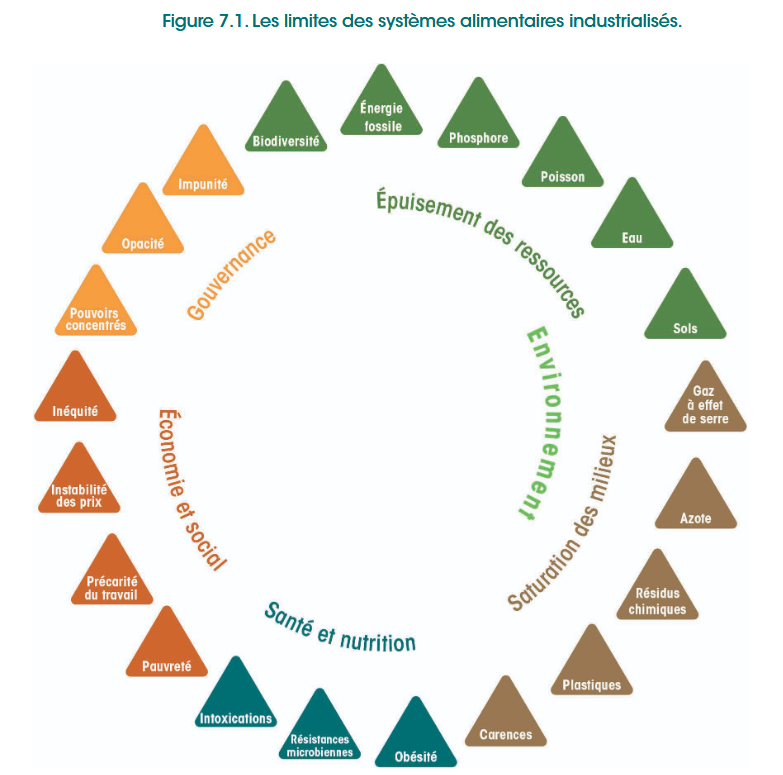
Figure 7.1. The limits of industrialized food systems.
Natural resources overexploitation and depletion
Industrialized food systems’ heavy reliance on an economy based on non-renewable fossil resources (Chapter 4) – primarily fossil fuels (coal, oil and gas) – is precipitating the depletion of these resources. In France, fossil fuel energy is used at all levels of the food system for the production of agricultural raw materials (27 per cent of energy consumption in the food system), transport (31 per cent), processing (15 per cent), refrigeration and household cooking (14 per cent) and distribution and catering (13 per cent) (Barbier et al., 2019). Other sources of energy (especially renewable energy) could be adopted in the future to offset fossil fuel depletion. But such substitution is not an option for phosphorus, which is essential to plant fertilization. This precious element is present in finite quantities in the soil, and its partial recycling – which was common practice until the nineteenth century – has given way to the growing use of mined phosphate, which is contributing to its depletion. Despite some controversy, there is broad consensus that rock phosphate resources will be depleted before 2150 (Peñuelas et al., 2013). Nitrogen, another fertilizer element, can be synthesized by legume plants (soybeans, groundnuts, peas, beans, alfalfa, clover, broad beans etc.), and there are abundant potassium mines, meaning that there is less risk of depletion for these two minerals.
Other resources, although renewable, are threatened by overexploitation. This includes forests – a carbon sink and biodiversity reservoir – the surface area of which is steadily being eroded by farmland encroachment, particularly in tropical regions (Congo Basin, Malaysia, Indonesia, Brazil), mainly as a result of the development of livestock farming and industrial crops such as oil palm. It should be noted that agriculture accounts for almost 40 per cent of the land area on earth, two-thirds of which is used for livestock grazing and feed production (FAO, 2020c). While the rate of global forest cover loss has slowed in recent decades, it is still estimated to have amounted to approximately 10 million ha per year since 2015 (FAO, 2020b). Recent assessments indicate that 17 per cent of tropical forests have disappeared since 1990 (Vancutsem et al., 2021). Moreover, stocks of fish and other marine resources are being harvested at a rate that exceeds their renewal, which is in turn threatened by the ongoing pollution of marine and continental waters by algae, waste, plastics and chemicals. The proportion of fish stocks harvested at a biologically sustainable level worldwide fell from 90 per cent in 1974 to 65.8 per cent in 2017 (FAO, 2020d). In some regions, water grabbing to irrigate crops and meet the needs of certain agri-food companies has had a direct impact on natural habitats and their functioning.
Finally, industrial agriculture and agri-food processing are largely responsible for the erosion of domesticated biodiversity – a process that is occurring much faster than the regeneration rate (IPBES, 2019). According to the FAO, just fifteen plants [1] provide 80 per cent of plant-derived food energy, with wheat, rice and maize alone accounting for more than half. The diversity of cultivated plant varieties is also being eroded by the market dominance of a few large seed companies. According to FAO estimates (2010), three-quarters of cultivated plant varieties were wiped out during the twentieth century. This loss of diversity, particularly genetic diversity, undermines the resilience of agricultural systems to threats such as pests, pathogens and climate change; it therefore poses a risk to food security (IPBES, 2019). Biodiversity loss also affects plants and animals that are not edible but are vital for pollinating and fertilizing plants or preventing disease. Moreover, this loss threatens agricultural production in the medium term (Hainzelin, 2019).
Natural habitat saturation
The massive use of relatively inexpensive chemical fertilizers in farming has resulted in the pollution of groundwater, rivers and coastal waters, and the eutrophication (algal blooms leading to oxygen depletion) of aquatic environments. This phenomenon is compounded by sewage sludge discharge – human excrement that is nitrogen- and phosphorus-rich but no longer recycled. In 2010, it was estimated that around 250,000 km of aquatic environments worldwide – equivalent to the surface area of the United Kingdom – were eutrophic (Pinay et al., 2018). This has caused major disruptions in the aquatic ecosystem, thereby endangering biodiversity, posing health risks for local residents and creating economic risks for activities linked to these environments. Chemical (especially nitrogen) fertilizers also cause airborne pollution. Ammonia emitted during the application of chemical nitrogen fertilizers combines in the air with nitrogen oxide produced by combustion engines and with sulphur dioxide from industrial sources, forming fine particles that are extremely harmful to health (Aubert, 2021). In the European Union (EU), it is estimated that agriculture is responsible for 90 per cent of ammonia emissions, which are a major contributor to air pollution and claim the lives of four hundred thousand Europeans every year (IPES-Food, 2019).
The use and discharge of chemical and petroleum industry products, namely pesticide and drug residues, is a secondary source of pollution. This pollution affects not only human health and the environment but also agricultural production capacity due to the disappearance of crop pollinators and the reduced fertility of soils as a result of overuse. Nearly two-thirds (64 per cent) of farmland worldwide exhibits chemical pesticide levels above the predicted no-effect concentration, while 31 per cent is considered to be at high risk of pollution, especially in Europe and Asia (Tang et al., 2021). Meanwhile, pollution from plastics, which are widely used in agriculture and food packaging, has been increasing very rapidly (half of the plastic manufactured since 1950 has been produced since 2000) without the faintest hint of a slowdown (Dalberg Advisors, 2019). Of the nearly 400,000 tonnes of plastic produced worldwide in 2016, a quarter of it ended up polluting land, rivers and oceans (Kaza et al., 2018). Marine fauna are hit particularly hard by easily ingested plastic micro- and nanoparticles. These particles travel very long distances and contain (or have absorbed) various chemical substances (Hermabessiere et al., 2017) that are likely to have serious impacts on human health (Azoulay et al., 2019).
Finally, greenhouse gas (GHG) emissions represent a third major form of pollution. The most recent estimates indicate that in 2015 the agri-food system was responsible for a third of all global anthropogenic emissions (Crippa et al., 2021), a quarter of which (27 per cent) originated from industrialized countries that host only 15 per cent of the world’s population. The remaining emissions (73 per cent) were generated by countries of the Global South, including China, which account for 85 per cent of the world’s population. These figures should not mask the fact that households in industrialized countries have a higher carbon footprint due to their reliance on imported foods produced in developing countries – a production that is also a source of GHG emissions. These are referred to as ‘imported emissions’ and are often overlooked in carbon footprint calculations. Emission sources differ markedly between industrialized and developing countries (Figure 7.2). In developing countries, 71 per cent of food system-derived GHG emissions are linked to land use, agricultural production and livestock farming, compared with 57 per cent in industrialized countries. In the latter, post-harvest activities (transport, processing, packaging, distribution, consumption and waste management) account for a major share (43 per cent) of emissions. Interestingly, transport – which food supply redistribution efforts often aim to minimize (Chapter 17) – accounts for only 10 per cent of emissions (Crippa et al., 2021).
Nutrition and health risks
Global food shortages and famines have been scarce over the past half century. A large share of the global population has been lifted out of dire poverty, and food safety has significantly improved (Stanziani, 2005). Yet the industrialization of food systems has failed to eradicate malnutrition and has generated new individual health risk factors.
Undernutrition has declined overall in both absolute and relative terms since the 1960s, but in 2019 it still affected nearly 700 million people worldwide, with an uptick since 2014 (FAO and WHO, 2020). This recent historic reversal is not due to a shortage of food supplies, as the planet loses and wastes around 30 per cent of what it produces (Gustavsson et al., 2011). Instead, it is due to persistent poverty and, above all, to the fact that climate crises and conflicts are on the rise, which in turn has led to an increase in the number of displaced people who no longer have access to healthy, high-quality food. In 2019, the Internal Displacement Monitoring Centre (2020) recorded 24 million new climate refugees and 8.5 million people displaced by conflicts worldwide. The number of displaced people doubled from 24 million to more than 50 million between 2009 and 2019.
The data presents a series of three pie charts and corresponding bar charts that illustrate sources of greenhouse gas emissions on a global scale, as well as comparisons between industrialized and developing countries. In the global pie chart, emissions are distributed as follows: 31 percent from land use and change, 30 percent from post-harvest activities, 22 percent from agricultural production, and 17 percent from enteric fermentation. The accompanying bar chart reveals that transport contributes 5 percent, processing and packaging 9 percent, distribution 4 percent, consumption 3 percent, and waste 9 percent to total emissions. For industrialized countries, the pie chart indicates that land use and change accounts for 14 percent, post-harvest for 43 percent, agricultural production for 26 percent, and enteric fermentation for 17 percent. The bar graph for these countries shows transport contributing 10 percent, processing and packaging 10 percent, distribution 12 percent, consumption 3 percent, and waste 8 percent. In developing countries, the emissions pie chart highlights that land use and change constitutes 38 percent, post-harvest at 24 percent, agricultural production at 21 percent, and enteric fermentation at 17 percent. The related bar graph shows transport at 3 percent, processing and packaging at 8 percent, distribution at 1 percent, consumption at 3 percent, and waste at 9 percent.
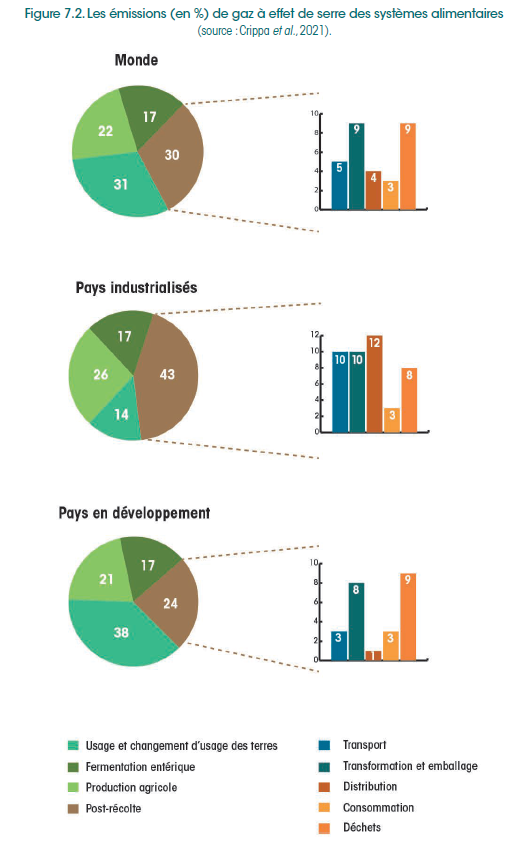
Figure 7.2. Greenhouse gas emissions (per cent) of food systems. (source: Crippa et al., 2021)
Micronutrient deficiencies (vitamins and minerals) – or ‘hidden hunger’ – stunt individuals’ physical and intellectual growth and weaken their immune defences. These deficiencies have irreversible health impacts and reduce people’s working capacity, thereby representing a major economic handicap. In von Grebmer et al. (2014), it was estimated that they still affected 2 billion people worldwide. Meanwhile, the rise in calorie consumption associated with increased intake of high-fat and sweet products, combined with a reduction in physical activity, has led to an increase in overweight and obesity, which are risk factors for illnesses such as type 2 diabetes, cardiovascular disease and certain cancers. One in three people worldwide was affected by this trend in 2020 (Global Nutrition Report, 2020).
Protein-energy undernutrition, micronutrient deficiency and overnutrition may coexist in the same country and even within the same family or the same person. This so-called triple burden (Labadarios, 2005) primarily affects developing countries, complicating the implementation of nutritional policy. Food safety risks could be considered as a fourth burden. According to the World Health Organization (WHO, 2015), every year 600 million people around the world fall ill from eating contaminated food, and 420,000 die from this foodborne contamination. The focus was long on the microbiological risks (Griffith, 2006) that contribute to malnutrition. Diarrhoea is a major risk factor for childhood malnutrition. But a new, as yet poorly documented, twofold risk is emerging throughout the world: chemical contamination and microbial resistance. First, this affects farm workers exposed to the chemicals they use. The WHO estimated that every year a million farmers were poisoned by pesticides worldwide in 1990, compared with 385 million in 2020 – 44 per cent of the overall farming population (Boedeker et al., 2020). Second, this toxicant poisoning also affects consumers, as ingested foodborne chemicals gradually accumulate in the body. The health effects are now being documented, especially those caused by endocrine disruptors, which may not be present in sufficient amounts to cause problems on their own but can be dangerous in combination (‘cocktail effect’) (Gaudriault et al., 2017; Muncke et al., 2020).
Environmental and health risks do not necessarily affect all people in the same way. For instance, climate change is having a major impact on the intertropical convergence zone, where very poor communities are concentrated, despite the fact that their GHG emissions are low. Moreover, obesity is more prevalent among poor populations residing in food deserts, where the supply of fatty, sweet and salty products is particularly high. Finally, food poisoning is often caused by eating very low-cost foods from the informal food sector that is generally predominant in the poorest neighbourhoods of towns and cities.
Socio-economic issues
Industrialization has been a driver of economic development, creating jobs and increasing consumer purchasing power, yet it has not eliminated poverty or reduced inequalities, including those that prevail in food systems. There is even a looming risk that poverty will grow in the years ahead as a result of climate change (+ 68 to 135 million people by 2030, according to the World Bank, 2021) and the COVID-19 pandemic (+ 88 to 115 million) (Lakner et al., 2021). These figures add to the 690 million people currently living in extreme poverty (with less than $1.9 per capita per day). These two combined phenomena could explain the anticipated worsening of food insecurity in these countries and the risk of massive outmigration, which would in turn generate new food crises.
Given that population growth is still high in many countries of the Global South – particularly in Africa – creating millions of decent-paying jobs, especially in rural areas, is a major challenge for food systems, which constitute the leading economic sector in these countries. According to the World Bank (2021 data), in 2018 four out of five people living under the international poverty line ($1.9 per capita per day) resided in rural areas. The poverty rate in these areas is estimated to be three times higher than that in urban centres. This disparity suggests that farmers in developing countries are underpaid, which, combined with the fact that living conditions in rural areas are generally worse than in cities, partially accounts for the trend of rural outmigration and the resulting mass urban unemployment. Inequality in the distribution of added value within commodity chains is especially acute in the agricultural sector and even more so in sectors exporting agricultural products from the Global South to rich countries. Moreover, a study by the Bureau for the Appraisal of Social Impacts for Citizen information (Basic, 2018) revealed that coffee producers earn only around 5.5 per cent of the sale price of ground coffee packets sold in supermarkets (7.8 per cent under fair-trade labels) and less than 1 per cent of the price of coffee sold in individual pods.
In the EU, it is estimated that the agricultural sector’s value share in the food chain dropped from 31 per cent in 1995 to 21 per cent in 2018, while farmers had to contend with a 40 per cent increase in input prices between 2000 and 2010 (IPES-Food, 2019). In addition, soaring food prices on international markets in 2008 and 2011 sounded the end of a roughly thirty-year period of relatively stable prices. The decline in buffer and/or security stocks, the tighter functioning of just-in-time markets and the increasingly close links between food, energy and financial markets suggest that the world could be entering a phase of greater price volatility (Galtier, 2019), thereby making farmers even more vulnerable. Markets for farm products have, admittedly, always been relatively unstable, given their dependence on climatic conditions. But this situation is now likely to be compounded by the growing number of climate crises (IPCC, 2013), epidemics (Tollefson, 2020) and conflicts affecting production and trade.
Finally, the highly disparate range of businesses (in terms of size, investment capacity, market share, financial strength etc.) competing for markets or resources – especially land – often accelerates the marginalization of smallholder farmers (Soulier et al., 2019). Competition between family farming and industrial farms or plantations is prevalent. The same competitive situation also exists further down the supply chain between industrial and small-scale processors and between supermarkets and street vendors. In countries undergoing demographic transition, such as those in sub-Saharan Africa, which will have to cope with an influx of 730 million new workers between 2020 and 2050, employment is therefore a major issue (Giordano et al., 2019). The rapid growth of low-labour industrialization potentially carries a very high risk. Moreover, the food system employs a huge number of low-paid workers: in farming (using migrant labour), in agri-food companies (assembly-line workers, e.g. in slaughterhouses where the work pace can sometimes lead to animal abuse), in the transport and retail sectors (drivers, handlers, cashiers), in the catering industry (cooks) and, in recent years, in meal delivery (the uberization of work) (Barthélémy and Cette, 2017).
All of these environmental, health and socio-economic risks overlap and combine (Bricas et al., 2019). While the compounding effects of these risks are still poorly documented, they raise fears of serious future crises and highlight the need for further research into the vulnerability and resilience of food systems.
Governance issues
Market concentration through mergers and acquisitions in the food system concerns suppliers of intermediate products (seeds, chemical fertilizers, pesticides and pharmaceutical products, agricultural machinery etc.) as well as companies involved in international trade, food processing and distribution. For instance, 70 per cent of the international agrochemical industry is now in the hands of just three companies and up to 90 per cent of global grain trade is controlled by four multinationals (IPES-Food, 2019). This concentration has several problematic consequences. It weakens the independence and bargaining power of farmers, who become dependent on upstream companies for their inputs and downstream companies for their market outlets, which dictate prices or force farmers to comply with very strict production specifications. This concentration trend steers technical innovation policies towards the most profitable solutions for companies, which do not necessarily take sustainability issues into account. Through oligopolies and agreements between competing firms, big business gains the power to sway public policy in favour of its own interests. These companies are highly opaque. They can manipulate information (and even scientists) to their benefit (Foucart et al., 2020) and act with relative impunity in relation to their impacts on the health of humans and the global environment, which they can contribute to deteriorating (Rastoin, 2016).
The digital technology boom is generating new opportunities (Chapter 5) but at the cost of increased governance risks. First, there are fears that the digital tech giants, namely the GAFAMs (Google, Apple, Facebook, Amazon, Microsoft), will increasingly gain control over these systems (GRAIN, 2021; IPES-Food and ETC Group, 2021). The deployment of personalized advice systems to help consumers make better food choices, based on the compiled history of their practices and interests, is showcased as a tool for strengthening consumer power. The FAO (2020a) director-general signed an agreement with CropLife International – a trade association representing the interests of the major agrochemical players – stating that ‘digital technologies can remodel agri-food systems so that production and trade would be driven by consumers’. We can rightfully wonder whether the development of big data is not in fact creating a major new challenge for society, namely the monitoring and control of individual behaviour and therefore of freedom, at a time when it seems vital for this behaviour to change in order to tackle sustainability challenges.
Conclusion
Development models designed in highly industrialized countries and disseminated worldwide through private investment and partly within the framework of international cooperation are now being challenged. In 2015, aware of the new risks raised by these development models, the 193 UN Member States drew up seventeen so-called sustainable development goals (SDGs). Unlike the millennium development goals (MDGs) of the preceding fifteen years, which applied only to developing countries, the SDGs concern all countries on earth, including the richest and most industrialized ones. Food systems, irrespective of whether or not they underlie the issues identified, are relevant and can contribute to achieving most of these goals (Figure 7.3). Food systems can therefore no longer be geared towards feeding humans, which they do by maximizing food production with a high degree of success, as is well known. They must now be guided by at least two other ambitions: actively contributing to ensuring the viability of the biosphere while also contributing to inclusive and equitable socio-economic and cultural development.
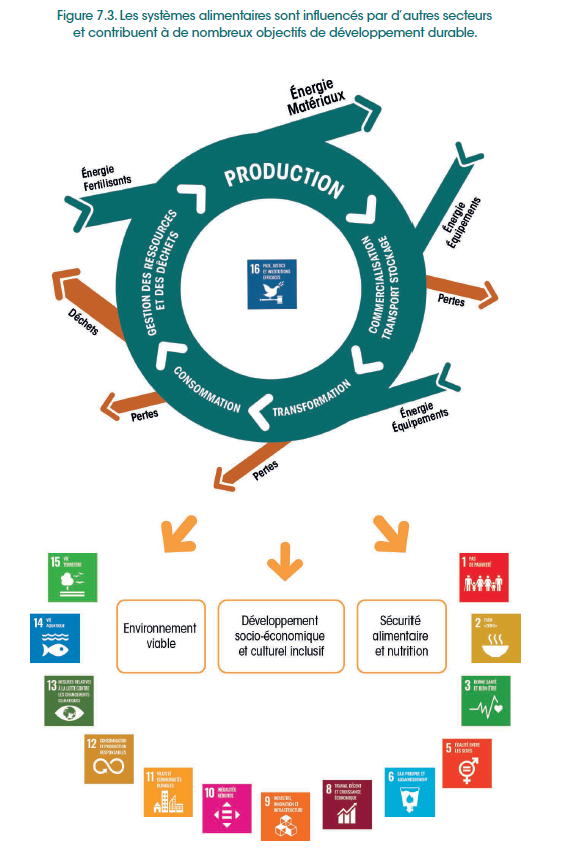
Figure 7.3. Food systems are impacted by other sectors and contribute to many sustainable development goals.
[1] Rice, wheat, sugarcane, maize, soybean, potato, oil palm, cassava, sunflower, rapeseed, sorghum, millet, groundnut, beans and sweet potato.