2. Dynamics of the contemporary food systems
Changing food habits
What we eat, how we prepare to eat – shopping, cooking, serving meals and managing waste – and how we think about it – our representations, values and concerns – constitute what are called ‘food styles’. As these styles are relatively constant over the short to medium term, they are more commonly referred to as ‘food habits’. They can however change over longer periods of time, either slowly or suddenly. For instance, there were no potatoes in France, no tomatoes in Italy, and no cassava or maize in Africa before the sixteenth century. In France, foods such as swans, peacocks, cranes, herons, whales and porpoises were highly esteemed socially in the seventeenth and eighteenth centuries but then completely vanished from the realm of what was considered edible (Flandrin, 1989). Changes in food habits correlate with agricultural (Chapter 4) and food supply (Chapter 5) transitions, but they also reflect societal changes that transform food consumers’ lifestyles and values.
The effects of societal change
Developments in agriculture and food systems are clearly instrumental in changing the world, prompting demographic growth and shaping landscapes. But human societies are also marked by major trends external to the food sector that contribute to transforming the way we think about and organize food. We offer a few examples here.
Urbanization, made possible by the production of surplus food to feed ‘non-farmers’, has transformed people’s ways of life and food practices. In urban areas, purchasing power has become the main factor determining access to food. These areas are home to populations of diverse origins with distinct food cultures, who have arrived over the waves of migration that have populated towns and cities. The food offer in urban areas is therefore more diverse than in rural areas. Moreover, city dwellers’ connection to the agricultural world is waning. People now often work far from their homes in an increasingly fast-paced world (Rosa, 2010), where time saving and convenience largely inform food practices. In Morocco, for instance, urban mothers’ social roles are diversifying, so they often seek to lighten their meal-planning load by outsourcing some meal preparation tasks or by patching together meals from leftovers or prepared takeaway products (Zirari, 2020). Finally, city dwellers often live in denser housing, where some food processing tasks are harder to carry out (drying, smoking, fermenting, pounding).
The increase in salaried employment, with the development of industry and services, has led to more regular and less fragmented incomes. Purchasing power is increasing in all countries with the emergence of a middle class. It is estimated that there were 3.2 billion middle-class people worldwide in 2020, a figure set to increase to 4.9 billion by 2030, with two-thirds of these people concentrated in Asia (Kharas, 2010). This middle class represents a market for processed foods that reduce some of the burden of housework. Yet, despite this economic growth, there are still people living in poverty, particularly in low-income countries, where over 200 million of the nearly 350 million existing jobs are filled by people considered to be moderately (95 million) or very (125 million) poor (Bendjebbar and Bricas, 2019). From the eighteenth century to the 1970s, inequality in living standards increased between countries but decreased within individual countries. Thereafter, the trend totally reversed (Giraud, 2019), with inequality declining between countries but rising within them, even in the richest countries.
Human migration is not solely the result of an exodus of rural people flocking to cities. It also involves inverse or even pendular movements that are conducive to the circulation of food styles between these rural and urban worlds (Odéyé and Bricas, 1985). It is also international and enriches food styles with new products, cuisines and consumer practices. The cuisines of North Africa, Southeast Asia, Japan and Lebanon, for instance, have spread to many countries. These cuisines are tailored and transformed in the host countries and can in turn be re-exported following this initial reappropriation (Herskovits, 1945), as in the case of Italian pizza (Sanchez, 2008) and Tex-Mex cuisine (Pilcher, 2001) following a North American detour. Cuisines must therefore be viewed in light of ‘the cultural mixes that permeate, structure, maintain and transform them’ (De Lima and Do Paço, 2012). Catering plays a key role in the spread of foreign cuisines and in the cultural mixing process.
The individualization of lifestyles since the nineteenth century is considered to be a major trend in Western and, more broadly, urban societies (Étienne et al., 1994, e.g. in Africa). This is reflected in the reduction of household sizes and the growing number of people living alone (15 per cent of the French population in 2013). It is also reflected in the rise of more individualistic values and attitudes. Community catering is becoming a way of putting together a communal meal consisting of portions of different dishes that are chosen according to individual preferences. Commensality (i.e. eating together) is changing shape – the same moment is shared but not always the same food (Fischler, 2015). In terms of food, and especially nutrition, this individualization trend has been compounded by the drive to personalize the food supply in order to better meet the specific biological needs of individuals according to their height, weight, age, genetic traits, place of residence or level of physical activity (Fournier and Poulain, 2017).
Identity diversification is the counterpart of individualization. With urbanization and population mixing, communities of individuals are being reconstituted, becoming more complex and multiplying. Alongside the major traditional institutions (family, religion, profession) – which are becoming weaker in some countries and stronger in others – new social structures are emerging, such as affinity-based tribes (Maffesoli, 1996). This diversification is reflected in individuals’ belonging to multiple social groups (Kaufmann, 2004; de Singly, 2016). One may simultaneously feel attached to their parents’ region of origin, be an ardent supporter of a football club in the town where they live and be a great fan of a particular music genre. With this multifaceted identity, behaviours – especially eating behaviours – may shift depending on the situation and the group involved (Ascher, 2005). This trend has led to recognition of the diversity of acculturation processes, far beyond the linear notion of a transition from a ‘traditional’ to a ‘modern’ model. Deculturation refers to the loss of traditional food bearings, which can in turn trigger food anxiety among eaters (Fischler, 1990). Hyperculturation refers to a defensive overvaluing of one’s heritage culture, pendulism to an alternation between one’s culture of origin and host culture, mixing to the blending of cultures and innovation to the creation of a new culture.
While the feminization of society is taking place at very different paces across different societies, it is facilitated by urbanization and the influence of external models. This enables women to access salaried employment where they acquire new skills and responsibilities, in turn affording them a more independent income, even though they are often paid substantially less than men for the same qualifications and responsibilities. This feminization trend is also transforming (though generally very slowly) the gendered division of household food–related tasks: shopping, cooking, washing up and so on.
Trends towards the ‘medicalization’ (Foucault, 1988) and ‘healthification’ (Poliquin, 2015) of society can also be observed. Medicalization refers to the growing influence of scientific knowledge produced by health professionals as a substitute for religious precepts, while healthification denotes the trend towards individuals striving to enhance their state of health through a range of practices to control their body and environment. Nutritionalization (Chapter 9), which reduces food to its biological function, fits within this movement. These trends reflect the development of scientific knowledge in biology, medicine and epidemiology, which on a daily basis reveal new risk factors that receive wide media coverage. They also translate into growing concern for health issues, with food emerging as a key vector of health. However, against a backdrop of dietary confusion marked by the proliferation of competing standards (Fischler, 2019) and distrust of scientists, choosing food that is good for one’s health is not always an easy feat.
Environmental degradation in the form of pollution, deforestation, resource depletion and climate change is scientifically documented. This degradation is increasingly publicized in the media and perceived tangibly by people, which has heightened ethical concerns, especially for the environment, while also boosting awareness of livestock living conditions. This is in line with the more long-standing quest to maintain a relationship with an idealized ‘nature’, which many societies perceive as being external to humankind (Chapters 3 and 10). Rural and natural areas are valued as ‘wellness’ spaces, a perception that fuels efforts to reintroduce such areas within city centres through urban forests, ecological corridors, urban agriculture and related ecological projects. Naturalness is now considered a quality attribute (Lepiller, 2012) for both the environment and food products.
These changes in the environment, lifestyles and societal concerns are shaping food behaviour and demand. Agri-food companies are also taking them into account, turning them into opportunities for innovation (Chapter 5). This has accentuated the trends outlined above, which are spreading worldwide, particularly through the globalization of information and the penetration of multinational corporations into markets in emerging countries. But does this mean that food habits are converging towards a unified model?
Towards standardized food styles?
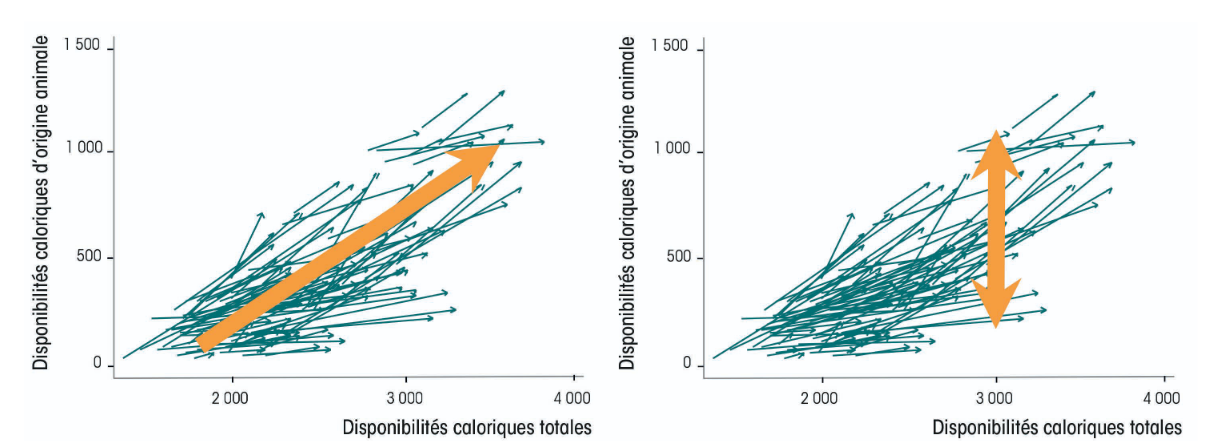
Throughout the world, food consumption is gradually converging towards a new average calorie intake structure: while the initial carbohydrate-lipid-protein ratio was around 75-15-10 (in per cent), all countries are heading towards a ratio of around 50-40-10 (Combris and Soler, 2011). The protein intake structure is also changing, with a reduced intake of plant proteins in favour of animal proteins. This trend is presented as a food transition driven by the increased food supply, the commodification of access to food, rising living standards and urbanization (Popkin, 2014). This nexus of trends is also reflected in the overall increase in processed products and the global spread of certain foods (bread, pasta, chicken, onions, tomatoes, sugar, beer, soft drinks) and even dishes (pizza, hamburgers, sushi, kebab). For some authors, this trend indicates the ‘Westernization’ (Popkin, 2014) or even ‘Coca-colonization’ (Ritzer, 1992) of global food. However, there is a lack of consensus in the analysis of these trends. Figure 6.1 below illustrates two perspectives on the evolution of total caloric intake (x-axis) and animal caloric intake (y-axis) between 1961 and 2005 in major countries around the world (representing more than 5.3 billion people).
The graph on the left highlights the overall trend, which appears to be structurally inescapable, whereas the graph on the right shows the disparity between situations for the same total caloric intake level and focuses more on what differentiates them. These two perspectives point to two approaches in the strategies adopted by multinational food corporations – the first is geared towards disregarding the historical and cultural backdrop to focus on spreading a unified model, while the second, conversely, calls for taking these differences into account.
If we consider the more granular scale of products consumed rather than large agro-nutritional aggregates, the convergences are less apparent. Although wheat, rice and maize are staple foods for half the global population, communities in entire regions of the world still rely on cassava, yams, millet, sorghum or potatoes as their main staples. China and India, whose economic trajectories are marked by a high increase in purchasing power, differ in that meat consumption has risen sharply in China and dairy consumption in India. At an even more granular scale, even though some dishes are now becoming globalized, culinary specificities still prevail. Lebanon is a prime example. With a large global diaspora exposed to a wide range of influences, and with imports accounting for 70–80 per cent of its food (Bessaoud, 2020), the country is a perfect symbol of globalization. Yet Lebanese cuisine itself is still very much alive within the country and is exported all over the world. The dissemination of food models from dominant countries can trigger a hyperculturation response (Juvin and Lipovetsky, 2010) – that is, an assertion and over-appreciation of models perceived as being threatened (Barber, 2010).
Two side-by-side scatterplots illustrate the relationship between total caloric intake and caloric intake from animal sources. The scatter plot on the left features total caloric intake along the horizontal axis, which ranges from 1500 to 4000 kilocalories, while the vertical axis shows calories from animal sources, ranging from 0 to 1500 kilocalories. Most values on the horizontal axis fall between 1800 and 3200 kilocalories, and the vertical axis values extend from 200 to 1000 kilocalories. A diagonal arrow illustrates an upward trend, moving from the point 1800, 200 to 3200, 1000, indicating that as total caloric intake rises, so does caloric intake from animal sources. On the right scatter plot, total caloric intake is depicted from 1800 to 3200 on the horizontal axis. At approximately 3000 kilocalories along this axis, the vertical values range from about 200 to 1200 kilocalories, showcasing significant vertical variation at similar total caloric intakes. A large double-headed vertical arrow spans between the points 3000, 300 and 3000, 1100, highlighting this vertical scatter.
(source: Combris and Soler, 2011)
Figure 6.1. Two perspectives on the evolution of food calorie intake worldwide in kilocalories per person per day.
Global cuisines do more than simply resist outside influences. They are constantly developing, adapting, mixing and innovating by borrowing from a host of different sources. Foreign products are reclaimed in different ways depending on culture, habits and lifestyles (Gassie, 2017). Ceebu jën (rice with fish) was invented in the late nineteenth century by cooks in Saint-Louis (Senegal) using broken rice imported from Indochina, vegetables introduced by Europeans, African vegetables, peanut oil from Central America introduced during French colonial rule, and the abundant fish caught along the Senegalese coast. Its preparation method differed markedly from that of Senegalese dishes at the time: the rice and sauce were cooked in a single pot (ben cin), whereas ‘traditional’ dishes were cooked in two separate pots (niari cin) – one for the cereal base and the other for the sauce (Sankale et al., 1980). This dish – initially an urban invention from Saint-Louis and then Dakar – is now a hallmark of Senegalese cuisine and has been exported throughout the rest of West Africa, along with a meat variant, riz au gras or riz wolof (named after the dominant ethnic group and language in Dakar). Cities are therefore major hotbeds of innovation, in terms of both cuisine and the ways in which food is sourced and meals are organized, as the African, Latin American and Asian contributors to the ‘Eating in the city’ [1] symposia highlighted (Soula et al., 2021).
Soaring food prices in 2008 and then 2011, along with the riots they triggered worldwide, have raised a recurring question in the media: what will we be eating in the future? Prospective future food products – insects, in vitro meat, textured soy, nutritional beverages, algae, pills and so on – are attracting as much attention as the discovery of the unique features of ‘exotic’ peoples’ food. They evoke a mixture of curiosity and fear, even disgust, much to the delight of the media. Yet, looking back over the last fifty years, food habits have remained relatively stable. The pills, powders and food tablets that science fiction characters have been eating for decades have been slow to catch on, despite some companies regularly launching them on the market (e.g. Soylent) or developing them in laboratories (Monbiot, 2020). Changes in the food sector are relatively slow compared with trends in other consumer sectors such as communication technology.
Out-of-home eating habits are also diverse. While catering has existed since markets and fairs first emerged and since the advent of urbanization with street food and inns, in France, restaurants really began to develop in the nineteenth century (Pitte, 1999). Compared to home cooking, out-of-home catering is still more of a complementary service that people rely on for convenience or enjoyment on special occasions. Yet there are major differences between countries. For instance, eating out is very popular in Indonesia (Tinker and Cohen, 1985), but far less so in India, where home cooking is still the norm, although this often involves sending home-cooked meals to the other end of the city, as in Bombay, with its incredible system of dabbawalas – delivery persons who work as a network to dispatch food throughout the city (Roncaglia, 2013). Street food and small-scale catering prevail worldwide (Abrahale et al., 2019) despite the proliferation of food industries and supermarkets run by global corporations. However, it will be important to keep an eye on the online ordering and delivery revolution that is now extending to processed convenience food, with the growing involvement of both small- and industrial-scale caterers (Chapter 16).
An increasingly distant relationship with food
The growing distance in eaters’ relationship to food can be observed on several levels (Figure 6.2). Different forms of distancing may occur simultaneously:
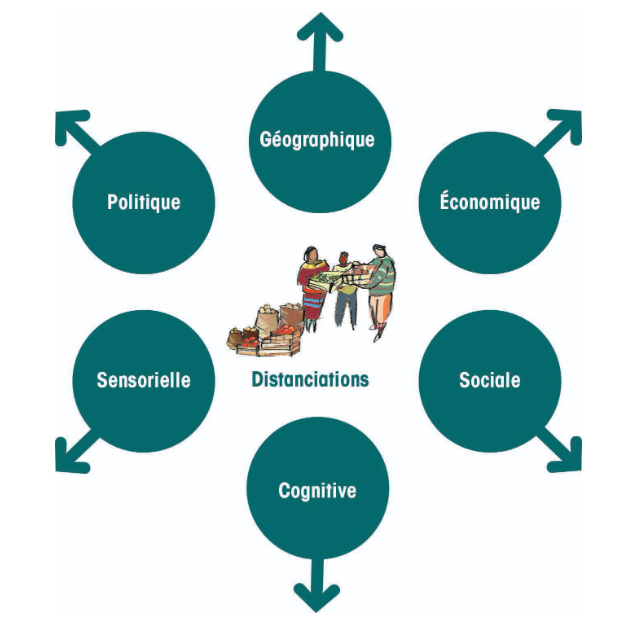
Figure 6.2. The forms of growing distance between consumers and their food.
- Geographical: not all areas, especially cities, can produce their own food; those that cannot are therefore forced to source it from increasingly distant areas. Urban sprawl, which encroaches on fertile land and production areas, along with the low cost of maritime shipping that makes long-distance trade very inexpensive, contributes to this geographical distance. Food consumers thus no longer know the exact origins of the food they buy and consume.
- Economic: this is the result of the growing number of food processing, transportation, storage and distribution intermediaries between farmers and food consumers. The price paid by the consumer is shared proportionally among a growing number of actors, while the share left to producers is shrinking.
- Cognitive: the proportion of farmers is declining against a backdrop of low generational transition and the lack of appeal of farming professions. At the same time, city dwellers are increasingly disconnected from rural communities.There is also less first-hand knowledge of the farming and food sectors. Some city dwellers no longer know where milk or cheese comes from, how to identify certain fruits and vegetables, or what the additives listed in the ingredients of processed products actually are.
- Sensorial: whereas food quality used to be assessed by tasting, smelling or touching an item, nowadays this is increasingly done by reading the information on packaging labels. The prehensile senses (taste and touch) are being superseded by the perceptive sense – sight, for instance, to read labels (Figuié and Bricas, 2014).
- Social: the individualization of eating behaviour is undermining the social standards that once made food a ‘no-brainer’ (Poulain, 2017). People are becoming increasingly responsible for their individual food choices and – under growing pressure – must personally decide what is and is not healthy to eat.
- Political: citizens’ control over their food system has been reduced to the choice of places to shop and products to buy, while their influence on food policy – for instance, in relation to pesticides – is limited.
These forms of distancing generate worry and anxiety (Fischler, 1990), which can even trigger a crisis of consumer trust (Masson, 2011) and a feeling of abandonment. In response, people are seeking proximity: geographical proximity (local), economic proximity (direct sales and short supply chains), cognitive proximity (gardening, fooding), sensory proximity (taste schools), social proximity (food influencers) and political proximity (food democracy). This response could be regarded as a grassroots movement – a pendulum swing towards a widespread return to local proximity (Chapter 17). It could also be viewed as intermittent or partial practices, which companies sometimes take advantage of to allay eaters’ concerns without actually calling into question the blind frenzy of excessive consumption.
Conclusion
Food styles are a reflection of society and are shaped by the food supply, lifestyles and values, but they also shape society. Food consumers send signals to companies that cater to their needs; these companies may also in turn stimulate or surpass these needs by creating substitute foods that may or may not leave a mark on people’s eating habits. The consumption of these foods – whether responsible or not – may have impacts on the environment, social equity, consumer and animal health and the biosphere. Food-style dynamics are reflected in this interaction between food consumers and their environment. Hence the importance of research on food environments or foodscapes, transcending the idea that only people’s specific characteristics are relevant to understanding their behaviour. Recognizing that supply matches the demand while also shaping it shifts the responsibility from the sovereign consumers to the actors (NGOs, non-profit organizations, institutions, politicians etc.) who build the foodscape (Part 5).
Diversification indeed appears to be a general trend in the evolution of food styles: this highlights the need to take into account the diversity and combination of eaters’ food preferences, eating practices and representations. Food styles should be approached through the prism of the diverse range of food products and places of procurement, production and processing, as well as the ways in which products are arranged in dishes, dishes in meals, and meals in food weeks, months or years. This can help avoid simplistic representations that pigeonhole food consumers into boxes, categories or typologies.
[1] These symposia were organized by CIRAD and the UNESCO Chair in World Food Systems in Paris in 2017 and 2020 and in Porto Alegre in 2018 on the topic of street food. They led to the publication of a book (Soula et al., 2021) and, in 2020, a special issue of the journal Anthropology of Food on the theme of ‘Gender and foodways under the urban life’.