1. Food as relationships
Food as a link with the biosphere
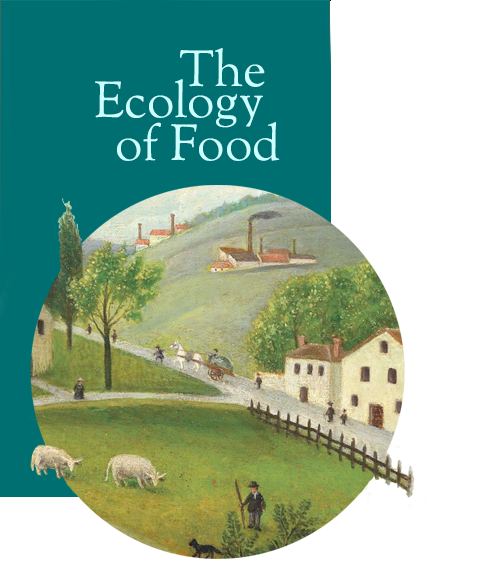
Our food, derived from the living world, embeds us in what Western thinking refers to as nature. Through the diverse activities that enable us to feed ourselves – farming, processing, cooking and digesting – we encounter non-human living organisms (plants, animals, microorganisms) and the tangible world inhabited by the living, on both physical and imaginary levels. This raises questions about the essence of our relationship with a biosphere that this chapter broadly outlines and explores from different angles: the landscape, the productive biosphere and the concept of nature or the living world. Through our food, we shape a biosphere that in turn shapes us and to which we relate on a landscape, sensory, imaginary and biological level.
Landscape development
Activities geared towards generating food, such as crop and livestock farming, fishing, hunting and gathering, transform the ecosystems in which they occur. Production activities involving practices as diverse as deforestation, planting, plant breeding, grazing, irrigation, fertilization, pest control and plot management may ‘artificialize’ the environment (Mazoyer and Roudart, 2006). These practices induce ecological changes within the biosphere, and over time, they have shaped many rural landscapes worldwide. Forests have been replaced by fields, moorlands by hedgerows, swamps by rice paddies and deserts by oases through ingenious management methods that have made it possible to articulate the needs of plants and animals, the potential of the natural environment and the imperatives of social organization (Mollard and Walter, 2008; Marshall, 2009).
Some forms of production-oriented agriculture, however, geared towards meeting the growing food demand and keeping food prices low, undermine the maintenance of ecological functions within agroecosystems, for instance, by causing biodiversity loss or soil fertility depletion. These practices can also have adverse impacts on natural environments, such as wetland drainage, pesticide pollution of waterways and seabed degradation through intensive bottom trawling (Chapter 7). Finally, beyond the prevailing farming methods, ‘what food we eat, and why we eat the food the way we do, [also] shapes “the landscape”’ (Wessell, 2010). From this perspective, the landscape is therefore not a separate entity but the result of the interaction between humans, their food choices (across varying distances) and the environment (Brulotte and Di Giovine, 2014).
This suggests a constructed dimension of landscape that is both identity-based and subjective (Périgord and Donadieu, 2007), which Roland Barthes (1985) defines as ‘the cultural sign of Nature’. With the concept of ‘tastescape’, Adele Wessell (2010) approaches the landscape as ‘a gastronomic text that records cultural dynamics and change over time’. By connecting time and space, as well as production and consumption, this concept of tastescape allows for understanding the ways in which we produce our food through the physical landscape, while also accounting for the experiences, imagination, beliefs and ideas associated with it. The concept of ‘terroir’, which underpins many collective cultural identities, stems from this very relationship with the landscape, at once objective and subjective (Chapter 2). Some landscapes transformed by our food activities are cultural landscapes recognized as UNESCO World Heritage: the Alto Douro Wine Region in Portugal, the Honghe Hani Rice Terraces in China, the Fray Bentos Cultural-Industrial Landscape where meat is processed in Uruguay and the Wachau Cultural Landscape where vineyards flourish in Austria (Roe, 2016). The layouts of these landscapes, as well as of more ordinary agricultural landscapes, reveal visual configurations (shapes, colours) that have developed at the crossroads of farmers’ practices, values and sensitivities (Busck, 2002). They often reflect an aesthetic that is sometimes visible only from the air (e.g. the layout of agricultural lowlands and hedgerows).
The link between food and landscape, however, is not limited to farming and the rural environment. Our food contributes to structuring cities and to the way in which they articulate with food production areas. In the Middle Ages, so-called organic cities were structured according to the food flows that transited through them – streets were designed to channel food products to the central marketplace, which was the very heart of the city (Steel, 2008). These urban spaces are forged by food habits, with food shaping the sense of place and meaning in urban areas. Large cities have developed on fertile plains, thereby enabling food production, or near rivers and seas, where ports are built to facilitate the transportation of goods, including food (Steel, 2008).
On land, food is supplied to cities through networks of roads used by farmers to transport their products, including livestock. In pre-industrial societies, although physical food supply constraints may have imposed a certain degree of compactness (Steel, 2008), cities operated in interaction with their breadbasket hinterlands. According to the model developed by Von Thünen in 1826, the agricultural belt around a city was to be structured in concentric circles – first the market gardens and dairies, then the fuel wood–production area, and finally the arable land for wheat cultivation and livestock grazing. Following a so-called urban metabolism cycle, cities were long fed by peri-urban farmland harvests, which they in turn fed with the waste they produced and processed into fertilizer (Barles, 2002). Agricultural industrialization (Chapter 4) disrupted this circular economy, with waste accumulating in cities and only marginally being used to supplement fertility cycles.
It is nevertheless important to note that not all cities – far from it – have relied solely on shaping a peri-urban agricultural landscape. As Fernand Braudel (1992) has clearly shown, since ancient times, many cities have been fed with products from afar, often without consideration for the socio-economic conditions of this remote production. Cities thus shape landscapes far beyond their sight. Today, for instance, urban consumers of palm oil products are contributing to the destruction of Asian forests. In cities, urban agriculture helps rethink spaces and landscapes and restore the human–nature nexus through activities such as gardening (Alarcon and Hochedez, 2018).
A collaboration with the living world
As an omnivorous species, humans are able to live in a range of environments and experiment with a wide variety of relationships with the biosphere. These human–nature links are reflected in the ways in which food is procured and produced. Since the beginning of sedentarization around 10,000 years ago, most human communities have shifted from a predatory to a production economy to meet their food, material and energy needs. In such an economy, producers engage in a process of collaboration with the living world. Rather than being human creations, agro-systems are actually co-productions by humans and nature – that is, a combination of natural processes and human-made disruptions (Larrère, 2002) leading to a voluntary structuring of the living world (Renaud, 2016).
Agriculture, livestock farming and fishing are not merely professional fields but also ‘life-worlds’ in their own right (von Bonsdorff, 2005). These activities go beyond the command of theoretical knowledge and practical know-how; they are underpinned by a sensitive understanding of living things, rooted in the body and experience. It is a matter of taming: farmers know their land, adapt to the climatic conditions, monitor their plants and form a bond with their livestock, which they perceive as emotional, communicative and intelligent beings (Porcher, 2004). These farmers rely on their senses to determine whether their crops are ready for harvest – by looking at the colour of a field, taking an ear of grain in their hand and testing its hardness, or biting into the kernels (von Bonsdorff, 2005). From experience, they know where and when to sow, which varieties to select and combine, and what conditions are affecting their animals. The complex and contextual nature of crop and livestock farming, as well as fishing, hinges on an ongoing interplay between knowledge and the senses and between knowledge and perceptions of the environment: this is the basis of farming expertise. The body is also involved in the effort to produce, rear or fish. Pulling up a net, helping a cow give birth and bending down to harvest crops are all ways of being an actor in the biosphere. This special link can be a key part of farmers’ identity, as is the case for the Peul people of Niger, a nomadic group whose identity is not attached to a territory but rather to their cattle herds (Sow, 2001), and for the Vezo people of Madagascar, who live off fishing and whose name means ‘paddling’ in Malagasy (Grenier, 2013).
The relationship with the productive biosphere is just as complex and should therefore not be romanticized. First, some production systems tend to reduce living organisms to an instrumental value, which raises ethical questions. This has been noted, for instance, with the development of genetically modified organisms used in agriculture (where an external gene is inserted into a plant’s genome by transgenesis) and with novel breeding techniques (where an existing gene in a plant is modified by mutagenesis). Second, working with the living world means recognizing the forces that are beyond our control: the climate, fires, the spread of pathogens, wild animals that threaten livestock and crops (e.g. wolves and elephants), and even the ‘wild’ side of plants (Javelle, 2020). Finally, the relationship with the biosphere, like that between humans, involves intuition, adaptation and harmony, but also violence and opposition. Moreover, the notion of nature is non-existent in some communities: interactions with the non-human world are subject-to-subject relationships (Descola, 1986).
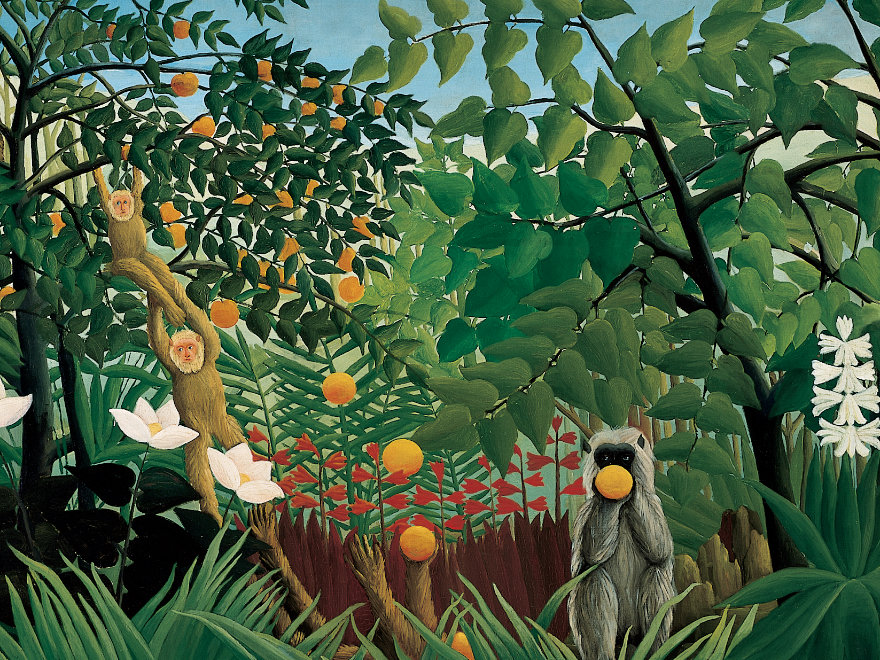
Collaboration with the living is also at play in food processing, especially during the fermentation process, which is undoubtedly one of our oldest food technologies. Fermentation is driven by microorganisms (bacteria, fungi, yeast) that feed on food. This process involves the physicochemical and biological transformation of foods, thus preserving and detoxifying them, while also boosting their nutritional virtues and changing their rheological and flavour qualities (Selosse, 2017). Regarding this latter point, fermentation enhances flavours, thereby enabling people, in some circumstances, to vary their otherwise monotonous diet. People living in Arctic regions, for example, who have no spices or condiments in their natural environment, are particularly fond of the taste of fermented fish (Robert-Lamblin, 1999). Historically, this process marked the agricultural transition to the Neolithic period, when it became essential to manage food stocks (Selosse, 2017). Fermentation then developed in many cultures, involving a variety of raw materials and preparations (milk, fish, meat, cereals, fruit and vegetables, seeds, cocoa etc.) that gave rise to a wide range of fermented products: yoghurt, cured meat, beer, wine and so on.
Fermentation involves a set of sometimes very complex techniques based on empirical knowledge and the careful monitoring of phenomena (Bérard and Marchenay, 2005). The gradual control of processing conditions went hand in hand with the ‘steering’ (Larrère, 2002) of the microbial communities involved in the fermentation process, even before humans were aware of the existence of these microorganisms. Fermentation was thus often considered a ‘magical’ process – it partly eluded eaters, who made sense of it through different interpretations, for instance, by imagining that gods were involved in the process. People thus had to surrender to this transformation process in spite of its inherent invisible dangers and unpredictable results: not everything can be controlled, but it is sometimes possible to adapt to microorganisms’ activities, for instance, by mixing wine casks after fermentation to achieve the right aromatic balance.
The growing focus on hygiene in industrialized societies nevertheless reflects a fear of microbes, which in turn informs production practices (e.g. the massive use of antibiotics in livestock farming) as well as consumption practices (e.g. the ideal of aseptization) that can give rise to various issues such as bioresistance and waste. Breaking away from the Pasteurian vision of the invisible living world seems to be a step in the right direction towards envisaging harmonious cohabitation with microbes, which are in fact part of our history, biological heritage and culture (Figuié, 2019).
Incorporating the living
What should we eat among the infinite food opportunities offered by the living world? The edible food space is fundamentally cultural (Chapter 2), determined by society’s perception of the status of human beings within the living world. Eating involves giving meaning to food, with a magical dimension to its representation. This recalls the incorporation principle (Chapter 1) – ‘you are what you eat’ – on a nutritional, social and imaginary level. The qualities projected onto the food ingested become those of the eater. For instance, in his research, the philosopher and anthropologist Lucien Lévi-Bruhl (1926) reported that in New Zealand, children destined to become chiefs were fed korimako (a very melodious songbird) so that they would become eloquent and good orators.
This magical thinking regarding food is also prevalent in industrialized societies and shapes many of our representations of food (Rozin, 1994; Lahlou, 1998). For example, water and green vegetables are seen as having cleansing properties for the body (Fournier, 2012). Laurence Ossipow (1994) conducted an ethnographic survey of vegetarians in French-speaking Switzerland between 1983 and 1990 and found that they viewed plants as living entities, especially those that can be eaten raw, such as sprouts. Plants were said to contain positive vibrations from Mother Earth, so eating them would enhance health and prolong life. Many cultures also see fermented foods as a source of vitality: fermentation is perceived as a process whereby inert and perishable material is transformed into living, preservable matter (Bérard and Marchenay, 2005).
Meat is another highly symbolic product that is often associated with vigour and strength, yet it may also represent a danger, as it did for the vegetarians interviewed by Laurence Ossipow (1994) who claimed that by eating meat one risked being exposed to ‘the animals’ moods’ or ‘being morally contaminated’, such that it was in some ways tantamount to ‘absorbing death’. The consumption of animal products raises questions about the animal–human continuum (Fischler, 1990) and, depending on the culture, may lead to various forms of ‘food murder’ management: sacred rituals, giving thanks to the animal, euphemization and dissociation of the meat from the animal (Cazes-Valette, 2012). The consumption of animal products is also part of a biologically and culturally defined repertoire: the only animals that can be eaten are those which, in a given situation, are neither too familiar (pets) nor too remote (wild animals that are not hunted). Some animals are deliberately avoided because of their symbolic status, such as the ‘Universal Mother’ cows, respected in India, and pigs, associated with impurity in Islam.
In terms of practices, the contents of our plates and the way in which they are presented are also telling of our link to the biosphere. Japanese cuisine, for instance, reflects its connection to the natural world through its attachment to the seasons, freshness, natural tastes and rawness. In the Inuit tradition, this link to the biosphere – and to culture – is reflected in the fact that food is eaten raw: beluga whale or caribou meat is eaten frozen and raw, as the elders did. In Nordic cuisine, the dishes are astute compositions through which cooks and eaters replicate the colours of the environment in which they live. The somewhat cold and metallic colours of seafood are ‘warmed up’ with bread, cheese and berries (Fumey, 2008). Gastronomy is no exception, with chefs inventing new ways of connecting with the biosphere. The French chef Michel Bras, for example, created a dish called Gargouillou, almost entirely composed of a variety of plants from his countryside in the Aubrac region – vegetables, young shoots, leaves, flowers, seeds and roots – which he described as ‘a dish that breathes life’ and ‘a tribute to nature’.
Symbiosis or the ‘extended’ individual
As we have just seen, food gives us many opportunities to connect with the biosphere. Yet ultimately the strongest, closest and most tangible relationship with the living world is the one of which we are likely least aware. This world is within us, in our mouth and intestinal tract, colonized by microorganism communities that transform and protect us (Selosse, 2017). In the digestive system, these microorganisms form the so-called gut microbiome, which uses the food we ingest as a substrate to fuel its own metabolism. We host about 160 different bacterial species in our gut, representing a mass of 1–2 kg (Insem, 2016). This microbiome in turn contributes to the proper physiological functioning of our body and health. These microbes not only break down food in the intestine but also produce essential amino acids, vitamins and vital molecules that humans do not otherwise synthesize, while detoxifying food and providing a barrier to the growth of pathogenic bacteria (Selosse, 2017).
This interdependence constitutes a perfect symbiotic relationship. Humans are not in fact autonomous entities, for their survival is dependent on other organisms, such as the flora that make up their microbiome, which has come to be regarded as a fully fledged organ (Pradeu, 2008). Finally, the act of eating brings non-human living organisms into the human realm (Trubek, 2005). The composition of the microbiome depends not only on biological factors but also on eating habits. For instance, Asian eaters host a bacterium in their microbiome that is capable of digesting algae, whereas European eaters lack this organism. This is an example of the co-evolution of diets and the microbiome, the array of microbes in which are gradually selected based on a person’s diet. The microbiome is thus an essential component of human beings’ biological and cultural identity; this raises questions about their individuality and calls for rethinking humans as ‘extended’ individuals (Rees et al., 2018).
Conclusion
Eating is about connecting with oneself, with others and, as we have just seen, with the biosphere, which is also inside us after all. How then can we consider ourselves as external to what Westerners call ‘nature’ if nature is in fact lurking deep within our bodies and interacting with us in a genuinely symbiotic manner?
Our food, by making us aware of the diverse relationships in which we engage daily through it, enables us to close the loop in our relationship with the world. This perspective invalidates the anthropocentric idea of the environment as external to us and prompts reflection on the conditions of co-viability between social and ecological systems in the ways in which we produce (Javelle, 2016), process, distribute and consume our food (Chapter 8). We transform our world by organizing and negotiating the way we eat with other living organisms and physical elements (Parts 2 and 5).