MOOC - Online training
MOOCs are co-organised by the Chair, the CNFPT and various other partners, and are delivered as distance-learning courses spread over several weeks. They are taught in French, so you can find full details of the content on the French-language page of the website. However, here is an overview of the various courses that have been run.
MOOC – Nutrition and Food Systems
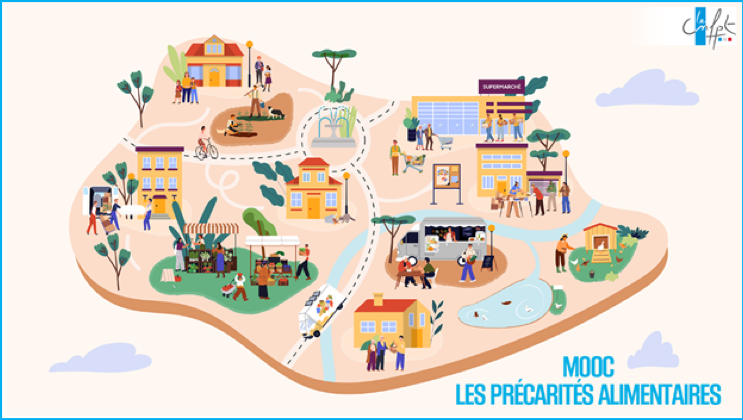
This MOOC takes a systemic approach to analysing issues of food security and nutrition, thereby contributing to the transformation of food systems and to more sustainable, equitable and healthy diets.
MOOC – Co-developing a local food strategy
This MOOC explores the methodology for co-developing and implementing a local food strategy. Aimed particularly at staff responsible for coordinating Local Food Projects (PATs), it provides key insights for confidently tackling these highly cross-cutting, multi-stakeholder initiatives. Drawing on feedback from regions with a long-standing commitment to such initiatives, it will demonstrate the value of a gradual approach – regularly expanded to include new components – which is key to mobilising stakeholders over the long term and serves as the cornerstone of a transition towards a sustainable food system.
Mini MOOC – Food Security in Africa
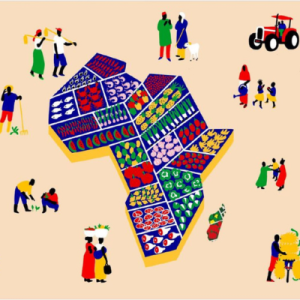
This MOOC explores the systemic complexity of the technical, socio-political, economic and environmental challenges linked to the models and dynamics that undermine food security in Africa. It presents a range of perspectives and complementary, inspiring projects, all relating to the shared challenge of achieving food security in Africa. The aim is to understand the capacity for action and the responsibility of professionals in relation to food security challenges on the continent.
MOOC – Food Insecurity
This MOOC addresses various questions relating to food insecurity by giving a voice to local government officials, central government officials, representatives of civil society organisations, researchers and people directly affected by food insecurity. It thus brings together different perspectives on a complex, multi-dimensional issue that requires tailored solutions. It focuses on ways to improve current food aid schemes. By highlighting several initiatives, it offers insights into a challenge that is more structural than cyclical.